Pages

Wednesday, September 30, 2015

The History of the Adirondack Chair

While I’ve been sitting in adirondack chairs for as long as I can remember, this weekend was my first time sitting in an adirondack chair while I was actually in the Adirondacks. This chair is found on everything from souvenirs like mugs and keychains to welcome signs, to the front porch of the great camps, so is clearly an integral part of Adirondack history and culture. This prompted me to wonder how adirondack chairs have become so widespread outside of the Adirondacks and what their origins were.

The adirondack chair was invented in 1903 by a man named Thomas Lee, while he was vacationing in the Adirondacks. He came up with the design after becoming dissatisfied with the poor quality of his lawn furniture. He tested over twenty different designs amongst his family members before deciding on the one we know as the modern adirondack chair – wide arms, a sloping back, and deep seat. After the chair was patented by a carpenter not long after, it began to gain more local attention. However, it wasn’t until the 1920s that the chair began to gain more popularity and began appearing in photos and paintings of the Adirondacks.
Adirondack chairs on the dock at Camp Wenonah

Today, many large companies continue to manufacture the adirondack chair, keeping up with its continuing popularity. However, while some are satisfied with a cookie-cutter chair from llbean or smith and hawken, others prefer to search for the antiques. While old adirondack chairs do exist, they are considerably harder to find. One would have to seek out a multitude of summer flea markets or antique sales before finding an original – especially if they are looking for pristine condition.

These chairs have spread far beyond the Adirondacks, and are now just as likely to be found in a California garden or at a Nantucket beach house. While the Adirondacks definitely had a slow start and have struggled to maintain vitality over some years, the adirondack chair has persisted as a symbol of summer across the nation.

Works Cited:

Price, Debra Muller. "Adirondack Chairs." Country Living 25.7 (2002): 69. MAS Ultra - School Edition. Web. 30 Sept. 2015.

The Bees and the Trees

The honeybee is an unsung hero in many of the world’s ecosystems. Yet, these bees are starting to receive some appreciation and attention due to the unfortunate circumstances of Colony Collapse Disorder (CCD), a condition in which honeybee colonies experience inexplicable population drops when bees leave the hive and never return. There is still no definitive explanation for the cause of CCD, but scientists have begun extensive studies to get to the root of the problem, fearing that human activity may be a major contributing factor. Thus far, studies have identified a number of potential culprits, including common honeybee parasites and pathogens, chemical toxins and insecticides, and destruction of natural habitats.
Habitat destruction is especially concerning, as it is most directly linked to human activity. Studies suggest that honeybee habitat loss resultant of human activity can correlated with CCD incidence. The number of honeybee colonies in the United States has steadily declined for the last 30 years, and coincides with substantial decrease in total cropland, pastureland and rangeland area in the United States as land becomes developed. Following this trend, fewer types of pollen and fewer potential hive sites are available to the honeybees in developed areas, which may contribute to malnutrition and colony instability.[1]
In this race against time to identify the causes of CCD and develop remedial programs, one study had emerged from the Adirondacks, and the results may be surprising. One team of scientists studied the northern hardwood forests, and in true Adirondack fashion, to identify the effects of logging on midsummer diversity in native bee populations. They measured bee abundance and diversity on a series of 5-acre plots two and three years after experimental logging removed 30, 60, or 100% of the trees. They found that logging actually led to a significant increase in native bee diversity and abundance. Data show the most bee abundance on plots where 60% of the trees were logged, leaving a thin canopy and mostly open, sunny ground. Bee abundance was ten times higher in 60% logged plots than in 30% logged or clear-cut plots, although bee diversity was highest in clear-cut plots.[2]
The scientists reasoned that logging treatment influences the floral resources available to bees. Tree removal allowed more sun to reach the forest floor, encouraging growth of flowering herbaceous and weedy plants that bees need for nutrition. And since most critters will follow the food, bee populations are often directly correlated with flower abundance. Logged areas might also increase types of hive sites for bees, such as dead wood (slash) and weeds, which may help colony stability. [2]
This study suggests that some things are good in moderation. Humans may not be as destructive as is assumed, although we have a long way to go until we can live in complete harmony with nature. Still, Dean Thompson, a beekeeping hobbyist in the Hamilton College community estimates that beekeeping is becoming more popular a result of the spreading news about Colony Collapse Disorder. We need more research and awareness of honeybee welfare before CCD can be tackled in any definitive way, but for now, the bees keep buzzing and the rest of us have reason to hope. 


[1] Naug, Dhruba. "Nutritional Stress Due to Habitat Loss May Explain Recent Honeybee Colony Collapses." Biological Conservation 142.10 (2009): 2369-372. Print.

[2] Romey, W. L., J. S. Ascher, D. A. Powell, and M. Yanek. "Impacts of Logging on
Midsummer Diversity of Native Bees (Apoidea) in a Northern Hardwood Forest." Journal of the Kansas Entomological Society 80.4 (2007): 327-38. Web.

Blurred Lines


After learning of the lawsuit filed against writer and editor Phil Brown for trespassing and canoeing through private property I became curious about legal battles with the law concerning this land. It seemed curious to me, that an area that so greatly emanated the value of freedom, could have so many lawsuits and restrictions.
In 2013 a case was filed against the New York State Department of Environmental Conservation and the Adirondack Park Agency for preventing the maintenance and construction of new trails within the forest preserve. Protect the Adirondacks argues that the expansion of snowmobile paths disturbs the park, imposing negative ecological impacts on the environment. This claim holds some validity for those fighting the case. The paths needed for snowmobiles to run through the park aren’t really “trails”, but more like roads, expanding to widths of 12 feet or wider. Description: Macintosh HD:Users:charlottewyman:Desktop:MRP-Snowmobile-Trail-7.jpg
More importantly, however, they believe that through the construction of these large paths, the park is also permitting the use of large mechanical snow grooming machines on certain snowmobile trails. This is a key component of this case; PROTECT emphasizes that the lawsuit is not about eliminating the use of snowmobiles on the the Forest Preserve, but that it is about eliminating motor vehicle use that might further harm the trails and create noise disturbances for those living in the area.

Overall, this is a hard case. The line between environmental preservation and allowing what is beneficial to the development of the Adirondacks is often blurred in this area. By creating new paths for other types of motor vehicles, the park is working to attract other types of tourism and business that could bring more people to the area. This would bring the beauty of the Adirondacks further into the eye of the public, and perhaps the mindset of natural preservation could be spread outside the park and into the rest of our country Yet, this potential economic and social progress comes at a price. Mckibben would claim that this invasion of the land reflects our hyper individualism. Is the use of motor vehicles really worth the sacrifice of what we consider the last remnants of undisturbed wild? Can’t we learn to appreciate the land for what it has to offer, without imposing on it with our own establishments? We must learn to decide what is more beneficial to us, the economic expansion of this land, or maintaining it’s preservation and purity as the last remaining forms of wilderness.


Saturday, September 26, 2015

Varying Paths and a Similar Goal

The small portion of Nature Guide to the Northern Forest that we read this week was quite interesting to me, largely because of Peter Marchand’s introduction. In the introduction, Marchand’s immense love and respect for nature is clearly shown. What interests me about Marchand’s description of himself as a young child is how different his actions and passions were from my own when I was a child. As a disclaimer, when I compare Marchand and myself throughout the rest of this post, I am merely comparing us for the sake of example, and not because I feel that I am nearly as skilled or accomplished as he is. Regardless, I now feel similarly to Marchand in the sense that I am attached to nature, though it is evident that this passion was not derived directly from my childhood experiences. As a child, on the occasions I would hike with my family, I would constantly complain that we were simply walking for walking’s sake, and that we had no end goal in mind. I believe that a significant part of the reason for my discontent in these situations was because I was raised in New York City. This is where my experience differs sharply from Marchand’s, and it is what interested me most when reading about his childhood. As a result of growing up in New York City, I felt disconnected from nature for most of my childhood. This apparent disconnection did not bother me however, nor did I even notice it for that matter, or I likely would have done something to remedy it. Instead, I was content to live an urban lifestyle without much focus on nature. Near the end of high school, I recognized that my lifestyle was relatively detached from the natural world, though I obviously was no different from anyone else in the way that I depended on its resources. Due to this realization, I decided to get involved in outdoor activities in college.

            In my time at Hamilton, I have learned so much about the natural world and had great experiences in the outdoors. I now see myself as quite similar to Marchand in the sense that I derive inspiration from and deeply appreciate nature. The vastly different paths Marchand and I took that resulted in us both respecting the natural world fascinate me, as I think it is a great example of the way in which people can converge at common goals despite having completely different experiences and backgrounds. More important however, is how this phenomenon can help shape our future. In relation to the conclusion of my first post, I sincerely hope that humans will find a way to protect our planet for future generations and for other species that reside here as well. I feel that attacking the issue of environmental degradation from many different angles will be essential in allowing us to alter our lifestyles to become more sustainable. Because of the need for many different perspectives, I believe environmentalists must come from all different backgrounds and have varying supplementary passions. This is the main reason I find the difference between Marchand’s and my life to be important. It shows that people with different experiences, and therefore different skills, can come together and fight for the same cause.

Citations: 
Marchand, Peter J. Nature Guide to the Northern Forest: Exploring the Ecology of the Forests of New York, New Hampshire, Vermont, and Maine. Boston, MA: Appalachian Mountain Club, 2010. Print.

Friday, September 25, 2015

Bring Back the Wolves


Bring Back the Wolves
            While the Adirondacks form a breathtakingly majestic arena, they presently lack a former resident that embodies their majesty: the wolf. In 1899, Reuben Cary shot what was thought to be the last remaining wolf in the Adirondack Park, but since then, sever lone predators have made their way back into the region (Stevens). The reappearance, albeit infrequent, of these animals in their former habitat serves as a reminder of what once was. 100 years ago, Adirondack dwellers could watch the sun set behind a towering line of peaks while a chorus of howls surrounded them; a chilling yet beautiful aural representation of the wilderness.
In addition to their existence value, which for me is priceless, wolves provide numerous benefits to the ecosystem. As an apex predator, wolves essentially keep everything in check and change the system in a sort of domino effect. The classic example given is that of the wolves returning to Yellowstone Park. There, free from fear of wolf predation, moose browsed the riverside vegetation away and destroyed the habitat of many creatures. When the wolves returned, the moose avoided the riversides, allowing for the return of the vegetation, which in turn brought back nesting birds, which brought back rodents, which finally brought back coyotes and fox (Crawford). As demonstrated by the Yellowstone example, the re-introduction of such an important species has potential benefits that cannot be predicted from the outset. According to Peter Bauer, the executive director of preservation group ‘Protect the Adirondacks,’ wolf re-introduction could have “similar types of very subtle yet profound changes on the ecological landscape of the Adirondacks,” (Crawford).
Of course, some are opposed to the re-introduction of wolves into the Park, namely those with livestock at stake. Currently, there are no inexpensive ways in which to remedy this concern and it may be enough to prevent any further investigation into action. However, the return of the wolf could benefit the Park in other economic ways. Wolf tourism in the Yellowstone scenario accounted for $35.5 million in revenue to the surrounding areas (Defenders). Perhaps there is a way to funnel this newfound income in a manner that compensates the livestock owners for any potential damage the wolves bring to their property.  
The validity of arguments on both sides requires much more research to be done. Hopefully, the arguments against do not provide enough backlashes so that this research won’t be carried out. Such a creature deserves to have its home back and such a landscape deserves to experience the benefits of this creature’s return.

Works Cited:
Crawford, Charlotte. "Should we Bring Wolves and Cougars Back to the Adirondacks." North Country Public Radio.Web. <http://www.northcountrypublicradio.org/news/story/29263/20150820/should-we-bring-wolves-and-cougars-back-to-the-adirondack-wilderness>.
Defenders of Wildlife. "The Economic Benefits of Wolves." Defenders of Wildlife.Web. <http://www.defenders.org/places-for-wolves/economic-benefits-wolves>.
Stevens, Scott. "Are Wild Wolves Making A Return?" Adirondack.net. 2011.Web. <http://www.adirondack.net/whatsnew/2011/10/wild-wolves-return.html>.

Thursday, September 24, 2015

Summit Stewards

With our trip to the Adirondacks coming up, as well as it being 46 Peaks this weekend, I decided to look at an article about hikers in the Adirondacks and how they interact with the area and can help preserve it.
The Adirondack Mountain Club (ADK) is a nonprofit organization that was founded in 1922 to aid in the preservation of the Adirondack region. The ADK is committed to the protection and recreational use of the Adirondack Park. In addition to conservation work, the ADK also has natural history programs and volunteer opportunities. On their website they give a lot of information about the Adirondacks, including weather conditions, hiking guides and trail conditions.
Summit Stewards are ADK staff members that work at the top of mountains in the High Peaks region of the Adirondacks. One of their jobs is to educate hikers on rare plants in the mountains in an attempt to prevent any harm from coming to them from hikers unknowingly trampling them. This program began in 1990 as a way to further protect the regions plants and strive for more protection of the park lands and all the natural life it holds. A recent article on the Adirondack Almanac announced that these Summit Stewards interacted with their 400,000th hiker last week. Julia Goren, the ADK Education Director said, “We’re absolutely astounded by this milestone number. There is no better way to protect these plants than by being up at the top where we can show people why it’s important to stay on the rocks and enlist their help. These plants wouldn’t exist on our Adirondack alpine summits today without hikers carefully choosing where to place their feet”. Just making people aware of their surroundings does so much to help conserve these plants. Many hikers would not know a rare plant when they saw one. 
As another way to conserve these rare plants, Summit Stewards also build rock walls to help keep the hikers away from the plants. In addition to these efforts, they also educate hikers in other areas, such as how to respond to rapidly changing weather conditions in the mountains. They even provide aid for injured or sick hikers, giving them assistance to get back down the mountain. It’s programs like these that have helped preserve even the smallest parts of the park for so long. 

Citations:
"High Peaks Summit Stewards Mark 400k Interactions -." The Adirondack Almanack. N.p., 24 Sept. 2015. Web. 24 Sept. 2015. <http://www.adirondackalmanack.com/2015/09/high-peaks-summit-stewards-mark-400k-interactions.html>.

Herb-ies, Fully Loaded

Today, medications are incredibly accessible.  Have a headache? We have a pill for that.  Does your stomach hurt?  Take a Tums.  Do you have really bad diarrhea?  Yup, we can fix that too.  Obviously, none of these modern medicines were available in the Adirondacks during the time of John Brown or Herreshoff.  In class we discussed this lack of medical care in the 18th and 19th centuries, and I began to wonder if there were any medicinal herbs present in the Adirondacks.  What I found was quite an extensive list, and I’m going to share a few favorites with you!

Heal-all (Prunella vulgaris)
These stocky purple flowers grow best in warm seasons. This herb was used to get rid of styes, cure diarrhea, and reduce internal bleeding.  Its uses extend to modern medicine, with scientists studying it as a potential treatment for herpes, AIDS, cancer, and diabetes!

HEAL-ALL (Picture from www.vitalitymagazine.com)

Jewelweed (Impatiens capensis)
Not only do these flowers grow in the Adirondacks, but they are at Hamilton in the Glen!  They are known to effectively treat poison ivy rash, and other traditional uses include the treatment of ringworm, insect stings, eczema, and cuts.  Additional fun fact: these flowers have spring loaded seeds that explode out when touched!


JEWELWEED (Thomas G. Barnes @ USDA-NRCS PLANTS Database 


Twinflower (Linnaea borealis L.)Ladies, this herb is for you! The Algonquins would use this flower in a tonic to treat painful menstrual cramps and pregnancy.


TWINFLOWER (Picture from: Al Schneider @ USDA-NRCS PLANTS Database
 http://edibleandmedicinalplants.weebly.com/medicinal.html)

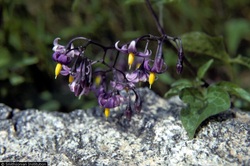
Bitter Nightshade (Solanum dulcamara L.)
This thicket growing plant was used as a narcotic, sweat inducer, and a treatment to warts and tumors. Modern medicine has found that the herb actually has cancer fighting properties. Additionally, this herb is used as a starting point for steroids.

BITTER NIGHTSHADE (Picture from R.A. Howard @ USDA-NRCS PLANTS Database 
http://edibleandmedicinalplants.weebly.com/medicinal.html)

Cardinal Flower (Lobelia cardinalis L.)
Typically found in streambanks or wet meadows, the Pawnee used this herb when making “love potions.” Iroquois used this flower to treat stomachaches, fever sores, and cramps. When times were desperate and tobacco was unavailable, this herb was used as a weaker substitute.

CARDINAL FLOWER (Picture from: Thomas G. Barnes @ USDA-NRCS PLANTS Database http://edibleandmedicinalplants.weebly.com/medicinal.html)


There are many more herbs that can be found at this website.  We place a lot of faith in modern medicine, but writing this blog post reminded me that there are effective cures to illness and disease in nature - and many can be found in our own backyard.

Works Cited
Rathbone, Ellen. "Adirondack Herbs: Heal-all"  Adirondack Almanack. Accessed: 22 Sept 2015. http://www.adirondackalmanack.com/2010/09/adirondack-herbs-heal-all.html

Ruan, Michelle.  Edible and Medicinal Wetland Plants of the Adirondacks. SUNY Plattsburgh, 2012. Web. 22 Sept 2015

Anderson, Kat.  Cardinal Flower. USDA, 2000. Web. 22 Sept 2015.